
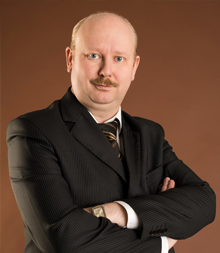
 Pavel Mikhailovich Gorev
News for authors
Dear authors and readers!
The periodical scientific and methodological electronic journal "Koncept" is an official publication, links to which are considered by leading organizations, in particular the Higher Attestation Commission, as a printed work.
To readers and authors of the journal
The magazine "Concept" is included in the HAC List and is classified as K1.
The journal accepts articles for publication in three scientific specialties of group 5.8. Pedagogy:
5.8.1. General Pedagogy, history of pedagogy and education;
5.8.2. Theory and methodology of teaching and upbringing (by fields and levels of education);
5.8.7. Methodology and technology of vocational education.
In addition, the journal publishes previously unpublished materials containing original research results in the following scientific specialty (not included in the HAC List):
5.3. Psychology.
The main issues (from 04.2017) are assigned the DOI (Digital Object Identifier) index, which is unique for each article and contributes to modern scientific communication.
Schedule for accepting articles and publications
Information mail
Materials are published in the order of their receipt by the editorial office within three months.
Article from the previous issue
ART 261219
Author:
 Maria A. Shemanaeva
Maria A. Shemanaeva
The article examines the problem of developing cultural literacy as a cognitive component of intercultural communicative competence among preservice foreign language teachers. The relevance of the study is determined by the requirements of the Federal State Educational Standards (FGOS 3++) and strategic documents in the field of education, which establish the development of intercultural dialogue and respect for cultural diversity as priority goals of higher education. The aim of the study is to identify key factors influencing the formation of students' cultural worldview and to assess the role of specialized academic courses in this process. The theoretical framework is based on intercultural competence models developed by M. Byram, A. Fantini, and D. Deardorff, which emphasize the cognitive component (savoirs/knowledge) as a foundation for developing reflective and behavioral skills. The empirical base of the study comprises the results of a survey of 80 fourth- and fifth-year students majoring in "Pedagogical Education (Foreign Languages)" at Petrozavodsk State University. The findings indicate the dominance of digital and entertainment channels as sources of cultural information: feature films and series (70%), social media (62.5%), and video platforms (37.5%). Notably, while only 12.5% of respondents identified university classes as a source of cultural information, 97.5% confirmed their positive impact on the development of cultural reflection. More than half of the respondents (55%) reported the insignificant role of family in shaping intercultural attitudes, which highlights the compensatory function of the academic environment. Personal intercultural experience was reported by 60% of participants, primarily in the form of short-term travel and online contacts. The theoretical significance of the study lies in clarifying the structure of cultural literacy as a dynamic cognitive component of intercultural communicative competence, transforming under the influence of digital media environments and institutional factors. The practical significance consists in developing methodological recommendations for integrating media content and structured intercultural dialogue into the educational process, which contributes to the effective development of students' universal competencies and can be applied in designing intercultural communication courses for various fields of study.
Current issue
№ 09 (September)
ART 261231
Author:
Vitalii Cilickii
Vitalii Cilickii
The publication is being processed. The full text will be available soon.
ART 261232
Author:
Olga M. Sherekhova
Olga M. Sherekhova
The publication is being processed. The full text will be available soon.
ART 261233
Author:
Rong Zhang
Rong Zhang
The publication is being processed. The full text will be available soon.
ART 261234
Authors:
Olga A. Vagaeva, Nadiia M. Galimyllina
Olga A. Vagaeva, Nadiia M. Galimyllina
The publication is being processed. The full text will be available soon.
ART 261235
Authors:
Natalya Chesnokova, Inna Shykyrova
Natalya Chesnokova, Inna Shykyrova
The publication is being processed. The full text will be available soon.
ART 261236
Authors:
Natalya Semyonova, Nan Bi
Natalya Semyonova, Nan Bi
The publication is being processed. The full text will be available soon.
ART 261237
Author:
Nikola Ponya
Nikola Ponya
The publication is being processed. The full text will be available soon.
ART 261238
Author:
Aleksandr Treshev
Aleksandr Treshev
The publication is being processed. The full text will be available soon.
ART 261239
Author:
Olesja V. Feoktistova
Olesja V. Feoktistova
The publication is being processed. The full text will be available soon.
ART 261240
Authors:
Yulia M. Vasina, Valeriya Mineeva
Yulia M. Vasina, Valeriya Mineeva
The publication is being processed. The full text will be available soon.
ART 261241
Author:
Viktoriya Rodionova
Viktoriya Rodionova
The publication is being processed. The full text will be available soon.
ART 262014
Authors:
Ekaterina Barasheva, Nadezda O. Sadovnikova
Ekaterina Barasheva, Nadezda O. Sadovnikova
The publication is being processed. The full text will be available soon.
All issues